Policy 103: Safeguarding
Effective Date: August 2025Purpose
This policy exists to protect children, young people, trainees, staff, volunteers, and associates from harm, abuse, neglect, exploitation, harassment, or bullying. It applies to risks that may arise from anyone within or outside the organization. The policy ensures that everyone can learn and work in a safe and respectful environment.
Core Principles
- Safety and wellbeing of trainees, and staff are paramount.
- All safeguarding concerns, whether involving students, staff, volunteers, or external parties, must be acted on immediately.
- All breaches of safeguarding responsibilities are treated as gross misconduct.
- Everyone has the right to raise concerns without fear of retaliation.
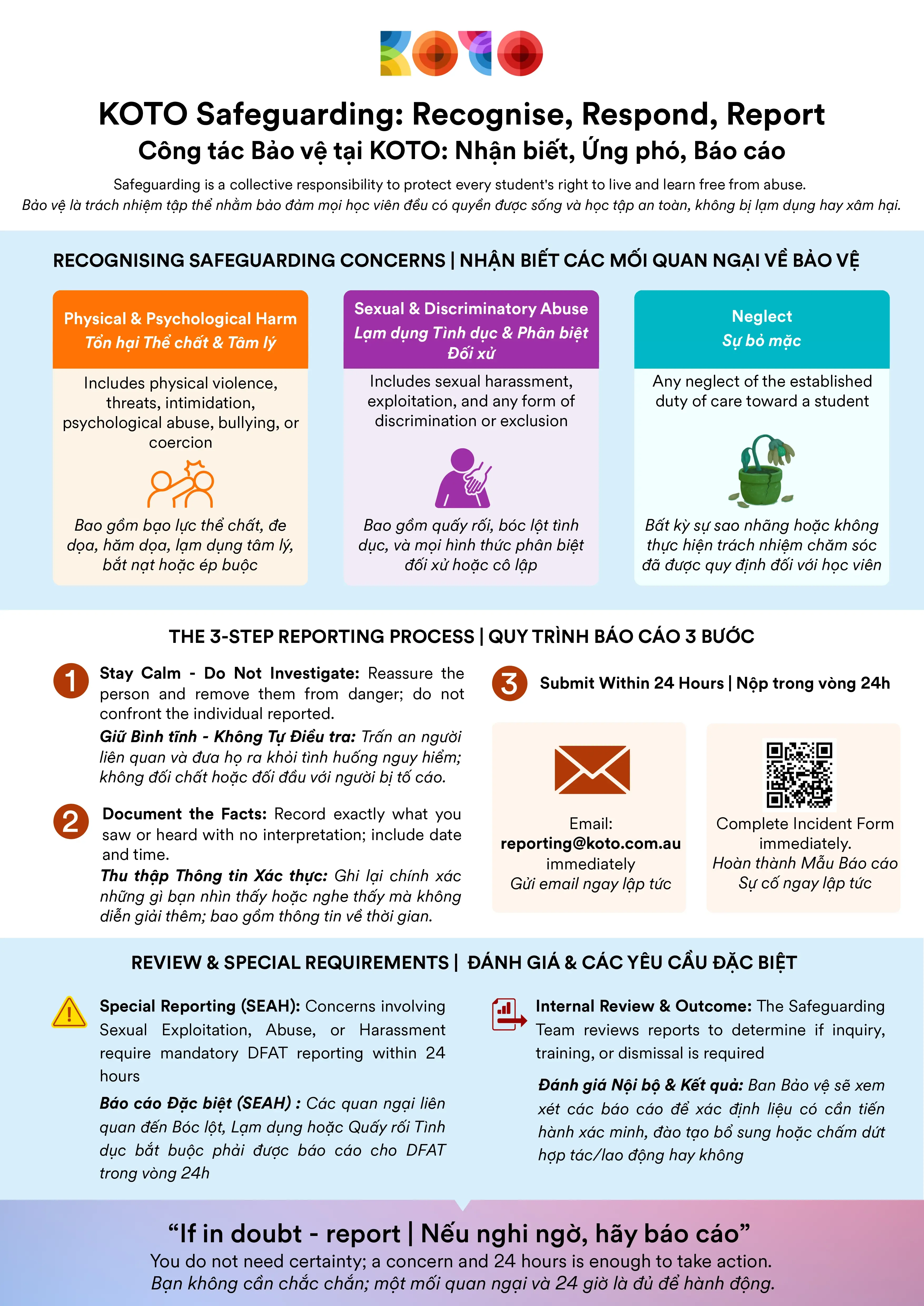
Examples of Safeguarding Concerns to Report:
- Inappropriate physical contact or touching
- Verbal abuse, threats, or intimidation
- Sexual harassment or suggestive comments
- Isolation, exclusion, or neglect of trainees
- Misuse of authority or coercion
- Sharing private or sensitive information without consent
- Discrimination based on gender, ethnicity, religion, or disability
- Substance misuse or unsafe behavior on premises
- Breaches of child protection protocols
- Any behavior that makes someone feel unsafe or disrespected
Responsibilities
| Role | Responsibility |
| All staff, volunteers, associates | Follow safeguarding procedures. Report concerns (including concerns about students, staff, or others) within 24 hours. Do not investigate independently. |
| HR and Foundation Director | Receive reports, initiate formal investigation, ensure confidentiality, liaise with authorities if needed. |
| Investigation Committee | Conduct fair and impartial investigation, report findings, protect all parties involved during the process. |
| Senior Management | Decide on outcomes and ensure lawful, appropriate, and transparent action. Promote a culture of trust and safety. |
| DFAT Reporting | As a downstream partner of a DFAT-funded organisation, KOTO is bound by DFAT's Protection from Sexual Exploitation, Abuse and Harassment (PSEAH) Policy. Any suspected, alleged, or known incident of sexual exploitation, abuse, or harassment must be reported to our upstream partner immediately and no later than 24 hours of becoming aware. Reports must be made regardless of whether the incident has been confirmed.
Reporting to be completed by the Foundation Director of their nominee |
Protection & Prevention Measures
KOTO is committed to creating and maintaining a safe, respectful, and empowering environment for all trainees, staff, and visitors. Our protection and prevention measures are designed to proactively reduce risk, promote awareness, and ensure accountability across all areas of operation.
Key measures include:
- Culture of Safety: Encourage openness, respect, and a zero-tolerance stance toward abuse, harassment, or bullying.
- Staff and Volunteer Training: All personnel receive safeguarding induction and ongoing training to ensure they understand their responsibilities and can identify and respond to concerns appropriately.
- Trainees Training - 6 monthly Training on what to report, how to report and responding to a safeguarding issue
- Code of Conduct: Clear behavioral expectations are outlined for staff, volunteers, and trainees, with zero tolerance for abuse, harassment, or exploitation.
- Safe Recruitment Practices: Background checks, reference verification, and safeguarding interviews are conducted for all staff and volunteers.
- Physical and Digital Safety: Secure access to trainee areas, appropriate supervision ratios, and responsible use of digital platforms are enforced to protect trainees from harm.
- Visitor Safeguarding Protocol: All external visitors—including donors, media, volunteers, and contractors—must complete the Visitor Safeguarding Acknowledgment Form prior to entering trainee areas. This ensures that every individual onsite is aware of KOTO’s safeguarding expectations and agrees to uphold them. The full procedure is outlined in the standalone 103.2 Safeguarding Protocol for Onsite Visitors, which is available at reception and on the KOTO Policy Hub.
- Reporting and Response Systems: Clear procedures are in place for reporting safeguarding concerns, with designated safeguarding leads responsible for managing disclosures and initiating appropriate action.
- Regular Policy Review: Safeguarding policies and procedures are reviewed annually or as needed to reflect changes in legislation, operational context, or identified risks.
Reporting Safeguarding Concerns (see 103 Safeguarding Flowchart.pdf)
- Stay calm, listen, and reassure the person raising the concern. If the situation is unsafe, remove them from immediate risk.
- Do not investigate or promise confidentiality.
- Report within 24 hours to the HR Manager, Foundation Director, or designated Safeguarding Lead.
- Concerns may involve:
- Staff about another staff member
- Staff about a student, or student about staff
- Student about another student
- External individual about anyone in the organization
- If in doubt, still report—better to err on the side of safety.
- All reports will trigger the Gross Misconduct Reporting & Investigation Procedures.
Investigation & Outcomes
- Any breach of this policy = Gross Misconduct Investigation Process ref: 102 Gross Misconduct Flowchart.pdf104.2 Serious Incident Investigation Committee TOR
- Possible consequences: warning, training, mediation (where appropriate), suspension (per Labor Code), dismissal, or referral to legal authorities.
- HR ensures compliance with legal requirements and protection of whistleblowers.
- Support (e.g., counseling, peer support) to be offered to those affected.
- Reports related to DFAT-funded activities must be made to seah.reports@dfat.gov.au within 24 hours.
Legal Foundation in Vietnam
-
Law No. 102/2016/QH13 on Children mandates that individuals and organizations must report acts of harm or risk to children.
-
Labor Code of Vietnam: Breaches of safeguarding duties that constitute gross misconduct may lead to dismissal without compensation (Articles 125–129).
Policy Review
This policy will be reviewed every two years, or earlier if legislation or organizational structure changes, or if emerging risks highlight the need for updates.